
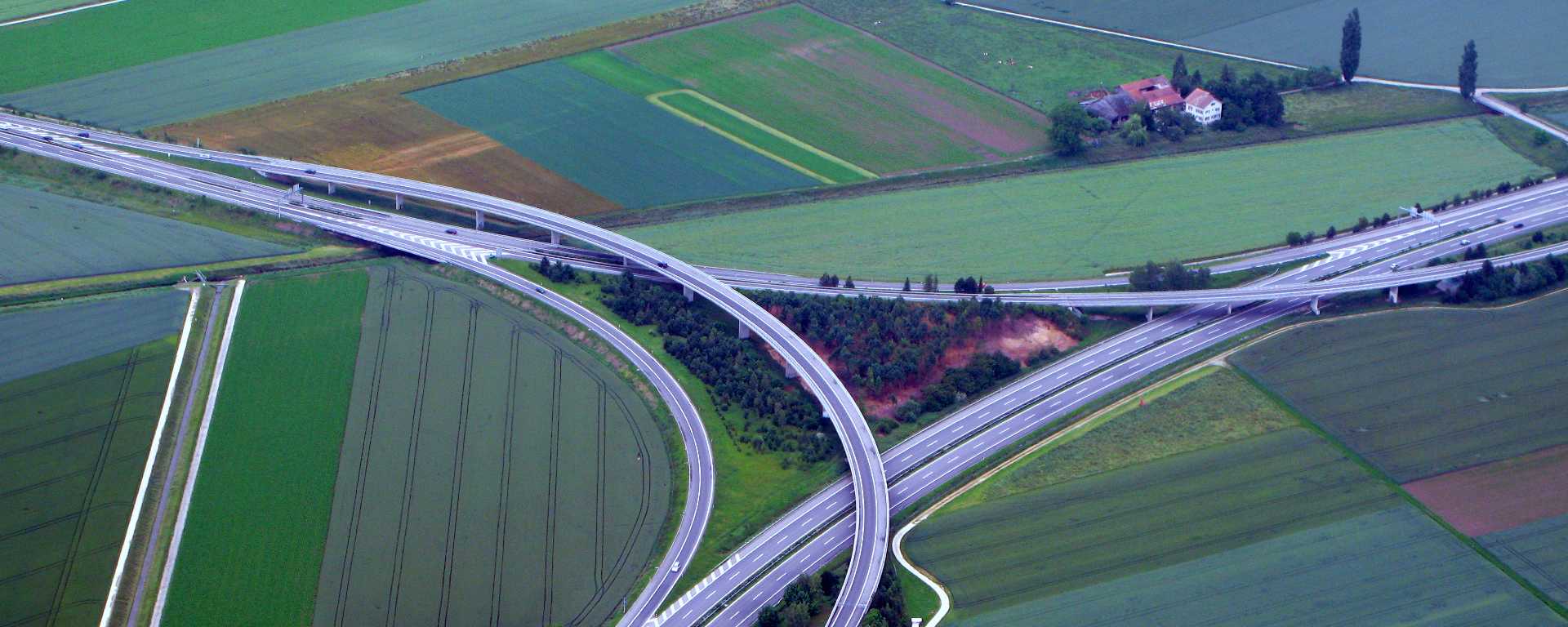
Are you going on holiday or on a business trip? Before taking to the motorway, there’s some useful information you need to know. The network, tolls, electronic badges… Here’s everything you need to know to drive with peace of mind, without any nasty surprises.

Motorways in France: a dense, well-organised network
Before talking about tolls and badges, it is useful to understand how the French motorway network is organised. Who manages it? Who maintains it? This context changes the way tolls are perceived.
A nationwide network
France has more than 12,000 kilometres of motorway. It is one of the most extensive networks in Europe. It links major cities, tourist areas and border regions, from Lille to Marseille, and from Brest to Strasbourg.
These roads are not managed directly by the State. They are operated by private concession companies: Vinci Autoroutes, Sanef, APRR, Cofiroute, Eiffage, etc. In exchange for a concession granted by the State for a fixed period, they finance maintenance, roadworks and user services. This model explains why, on the whole, French motorways are well maintained… and expensive.
Map of toll motorways in France
And to see the motorways in the regions of France, here’s an interactive map:
Infrastructure that goes beyond roads
Motorways are not just about tarmac. The network also includes equipment that is often overlooked:
- Major engineering structures: the Millau Viaduct (the highest road bridge in the world), the Pont de Normandie, the Mont Blanc and Fréjus tunnels
- More than 1,300 secure car parks in France and Europe, accessible with an electronic toll tag
- Complete service areas: catering, electric charging points, toilets, rest areas.
These services are evolving! More and more charging points for electric vehicles are being installed at motorway service areas. Real-time traffic information is available directly from operators’ applications, in addition to dedicated radio stations. The motorway is gradually becoming a connected space.
Free flow: the end of barriers
You may have heard of “free flow”. It’s a new way of managing tolls, already common in Northern Europe. No more barriers, no more forced stops. Sensor-equipped gantries read your number plate or badge automatically, at normal traffic speeds.
The A79, in the Allier region, is the first French section to be entirely converted to this system. The results are tangible: fewer traffic jams at toll plazas, potentially fewer accidents linked to sudden braking, and real time savings for all users.
Other sections are in the process of being converted. This change concerns everyone, with or without a badge. But with an electronic toll tag, you’re already ready.

Tolls and electronic toll collection: how does it work?
Fundamentally different from national roads, the motorway is built around toll booths, service areas and rapid access between the regions of France. Here are a few tips on everything you need to know about tolls.
Why do we pay on the motorway?
Tolls are not a tax. They are fees that directly finance :
- Construction of roads and engineering structures
- Daily maintenance (snow clearance, road markings, lighting)
- Improvements: track widening, safer tunnels, modernised lay-bys.
The amount varies according to the type of vehicle. A motorbike, a car, a camper van or a heavy goods vehicle do not pay the same rate. Vehicles are classified into categories, and prices are revised upwards every year, usually on1 February.
The classic toll: three ways to pay
In a traditional toll plaza, you have three options:
- Cash: practical if you have exact change, but increasingly rare
- Bankcard: fast, but involves stopping and handling the card
- The electronic toll tag: the smoothest, contactless, non-stop solution
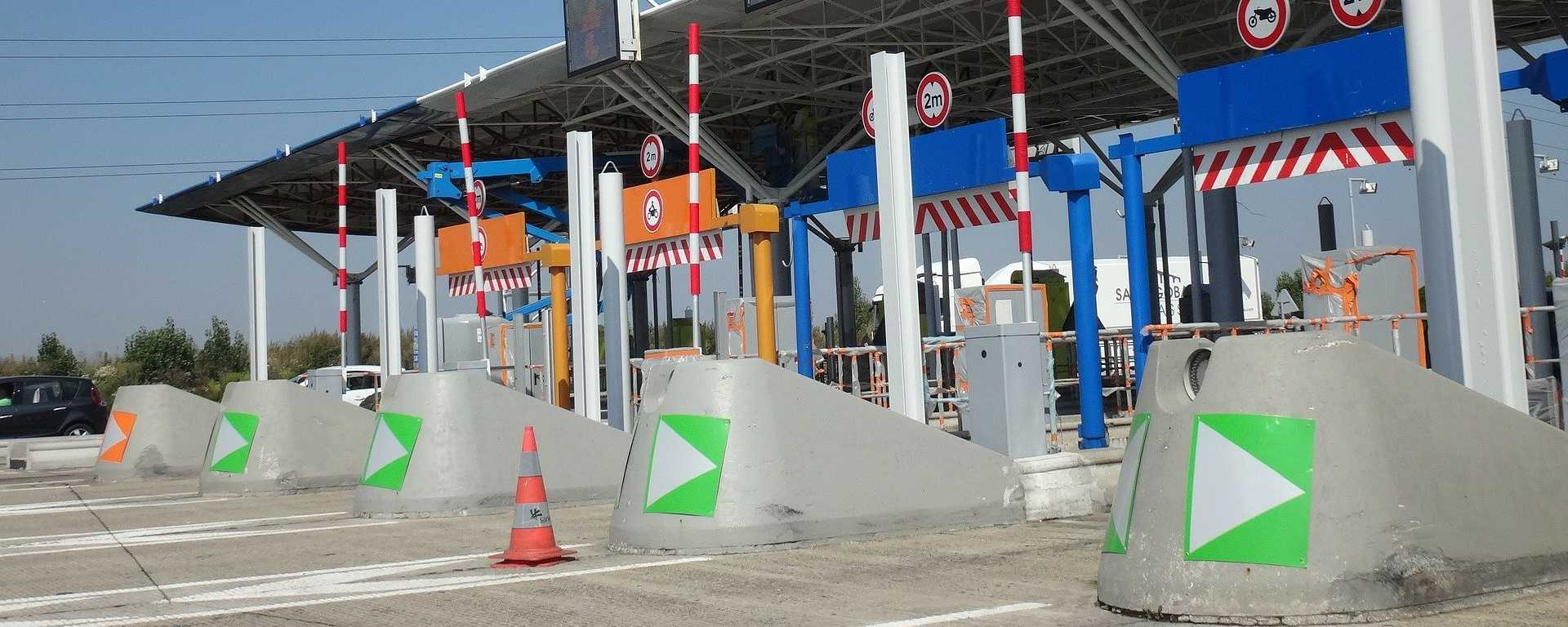
Lanes reserved for badges are marked with an orange“t” on a dark background. The maximum speed is 30 km/h in the special lanes, with a stop in the others. In free-flow mode, there are no constraints: you pass through without slowing down.
A practical tip : if you’re travelling at peak times (Friday evenings, the eve of bank holidays or bank holidays), the electronic toll lanes make all the difference. The queue moves forward, while others wait for transactions to be completed.

Electronic toll collection: the principle at a glance
An electronic badge. Affixed to your windscreen, preferably in the top left-hand corner to optimise the connection, or in the centre behind the rear-view mirror for better visibility. Using a contactless technology system, your badge interchanges with the gantry when you pass through, with a “beep” signalling the connection. Result: you don’t have to do a thing. No card, no change, no stopping.
Each journey is automatically recorded by the operator. At the end of the month, you receive a single invoice detailing each journey: date, time, place of entry and exit, amount. It’s simple, fast and traceable. Ideal for keeping track of your travel expenses.
The Liber-t badge: the French standard
In France, all electronic toll collection operators use the same standard: Liber-t. A single badge is used throughout the national motorway network. It is also accepted in partner car parks, on toll bridges and in some European countries.
Essential point to remember: the badge is not sold. It is given to you as part of a subscription. It is the subscription service that you take out – the badge is the tool you use to benefit from it. If you cancel, you return the badge.
Using your badge in Europe: what you need to check
Are you going to Spain, Italy or Portugal? Your badge can work abroad. But it all depends on the operator you choose and the option you take out.
Countries generally covered by French offers :
- Spain and Portugal: well-integrated networks, frequent compatibility
- Italy: coverage available depending on offers
- Belgium: access to electronic toll lanes depending on the operator
Before going abroad, take two minutes to check the compatibility of your package. Some operators include European coverage in their basic package. Others offer it as a paying option. Avoid an unpleasant surprise at the border toll, for the best possible start to your holiday.
How do I take out a policy?
You can sign up entirely online, in less than ten minutes. Here are the steps, in order:
- Assess your frequency: occasional or regular? The answer will guide your choice of formula.
- Compare the offers of the three main operators according to your usage and your usual destinations.
- Subscribe online: you will need proof of identity, proof of address and a means of payment.
- Receive your badge by post to your home address within 48 hours.
- Place it on your windscreen, with the logo facing the inside of the vehicle, top left, without obstructing your field of vision.
- Manage your journeys using the operator’s mobile application: journey history, invoices, free-flow alerts, location of partner car parks.
That’s all there is to it! Your next trip to the toll booth will be the last time you’ll be searching your pockets for your change 🪙 or CB 💳
A la carte or annual package: what should you choose?
It all depends on how often you use your car. Ask yourself a simple question: how many times a month do you take the motorway?
Do you take the motorway from time to time?
Then the à la carte option is for you. You only pay for the months you drive. No unnecessary deductions for months without journeys. It’s ideal for long weekends or occasional holidays.
Do you drive often, every week or even every day?
Then the annual flat-rate becomes more attractive. A fixed cost, smoothed over the year, for regular use. It doesn’t take long to do the maths: after a few months, you’re a winner.
Example of indicative tariffs, subject to update by your operator:
- A la carte formula: €2.10/month travelled (as at 1 June 2026)
- Annual fee: approximately €17.50/year, i.e. less than €1.50/month
- Set-up fee: €10 on subscription
- The à la carte package has no commitment
The individual or business offer
For private customers, there is a wide range of services on offer. Flat-rate for regular motorway journeys, à la carte for occasional journeys or even for subscriptions payable with Connect holiday vouchers. There are also special rates for young drivers, electric cars and regular journeys on certain networks.
For companies, flexible subscriptions that vary according to the number of badges and additional services: billing, consumption monitoring, access to electric recharging and other additional services depending on the package selected.
Having used it for a number of years now, and given the attractive price, it’s a comfort that you quickly get used to: no more searching for your bank card, no more opening your window in the middle of a heatwave, being in a fast-moving queue during traffic jams, taking advantage of the 30km/h lanes at major toll plazas and interchanges… The choice is yours for your next motorway journey!
Travel+