

Since its launch in France in 1981, the High-Speed Train (TGV) has revolutionised rail transport in Europe, offering unrivalled speeds and enhanced comfort for passengers. A practical guide to fast travel between cities and regions by rail.

The TGV in France
By linking major cities and metropolitan areas via 2,800 kilometres of high-speed lines, the TGV has transformed transport in France and, by extension, across Europe.
With 5 million passengers in 2022, it has, in the space of a few decades, become a flagship player in rail transport, with a national network operated by the inOui and Ouigo brands, and a range of operators serving European routes.
TGV tickets in France
To search for and book a high-speed train ticket in France:
Discount cards
Would you like to get regular discounts on your TGV train tickets?
Whether you’re a young person, a senior citizen or a working professional… there are several cards that let you travel at reduced fares all year round ↗:

Subscriptions
Do you travel by train regularly?
Whether weekly, monthly,annually or based on the number of journeys, choose your season ticket ↗:
Map of high-speed rail lines in France
And to see the high-speed rail lines within the regions and to Europe, here is a national map:

blue: high-speed lines (LGV)
black: conventional lines with TGV services
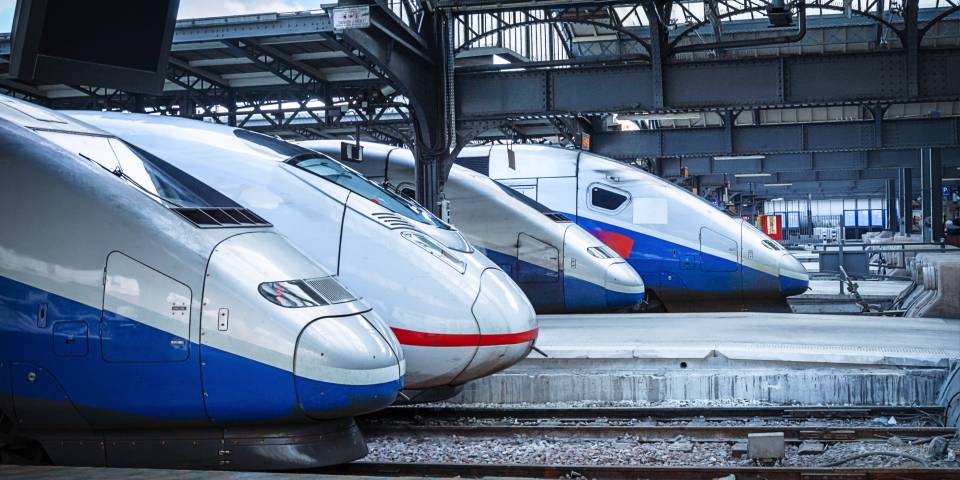
The TGV in Europe
Whether travelling to or from France, the high-speed rail network also offers connections to neighbouring countries: the Benelux countries (Belgium, the Netherlands and Luxembourg), Germany, Italy and Spain.
European TGV tickets
To search for and book your tickets to Europe, each national railway company offers high-speed services from your country of departure:
And here are the links for access by agency or by railway company in Europe:
- See also: the Interrail Pass for unlimited travel across Europe.
Map of high-speed rail links in Europe
Here is the SNCF map of high-speed rail links toEurope from France:
Map of TGV stations in France
Here is the SNCF map showing the stations served by the TGV in France and across Europe:

A History of High-Speed Trains
The idea of building lines specifically designed for high-speed trains dates back to the 1960s, with the introduction of Japan’s first high-speed train, the Shinkansen.
In France, the high-speed rail (TGV) project was launched in the 1970s under the impetus of the SNCF and the French government. The first high-speed line (LGV), the LGV Sud-Est, entered service in 1981 between Paris and Lyon. The speed record stands at 575 km/h on the Grand-Est line, set in 2007.
Since then, several other countries have developed their own high-speed rail networks, including Germany (ICE),Italy (Frecciarossa),Spain (AVE), the United States (Acela) and China (Maglev).
Beyond France’s borders, the TGV network has expanded to connect France with several European capitals. International services to Brussels, Geneva, Milan and Barcelona have strengthened economic and tourism links between the countries. In 2022, the TGV in Europe recorded 15 per cent growth, carrying over 120 million passengers.
Today, high-speed rail lines span thousands of kilometres across the globe and enable trains to reach speeds of up to 350 km/h whilst carrying passengers.
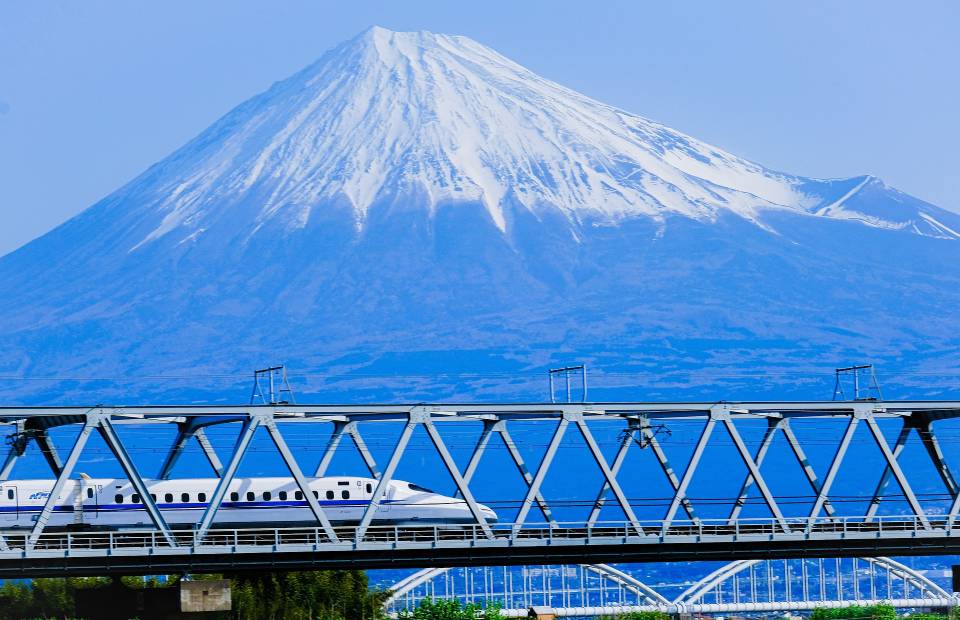
What is an LGV?
An LGV, short for Ligne à Grande Vitesse(High -Speed Line), is a railway line specifically designed to allow trains to travel at speeds of over 200 km/h. The key features of LGV lines include a straight alignment, wide curves and the absence of level crossings.
In some countries, tracks are also built with a wider gauge than standard lines, enabling trains to travel more quickly and safely.
High-speed rail lines are generally built in areas with gentle terrain to minimise construction costs and facilitate the movement of high-speed trains. Exceptions include routes crossing mountain ranges, such as the line between France and Spain via the Pyrenees.
The construction of a high-speed rail line involves building a new line, including earthworks, the laying of suitable track, and the installation of specific electrical and signalling equipment.
These lines are not without their challenges. Occasional delays and overcrowding on certain lines have raised questions about the future of high-speed rail. To address these issues, massive investment is needed to modernise the rail infrastructure and develop new high-speed lines, potentially at the expense of conventional lines.
The TGV is on track
The TGV is a train specially designed to run on high-speed lines (LGV). It consists of several carriages (usually 8 or 10) connected to one another and powered by power cars located at both ends of the train. TGVs are powered by an overhead line supplying either direct or alternating current, depending on the country.
The TGV’s aerodynamic design helps to reduce air resistance and the noise generated by the train whilst in motion. Sophisticated suspension systems ensure optimum comfort for passengers, even at high speeds. The trains are also fitted with specialist technologies such as automatic speed control, emergency braking and systems for communication, tracking and remote control.
From an economic perspective, the TGV has stimulated regional development by facilitating trade and attracting new investment to the areas served by these lines. Furthermore, the construction and operation of these new lines have created numerous direct and indirect jobs.
Finally, the TGV also offers environmental benefits, such as a reduction in greenhouse gas emissions, thanks to its lower energy consumption compared with road and air travel.
However, the construction of these lines also has negative impacts on the environment, such as encroachment on agricultural land and the fragmentation of natural habitats.
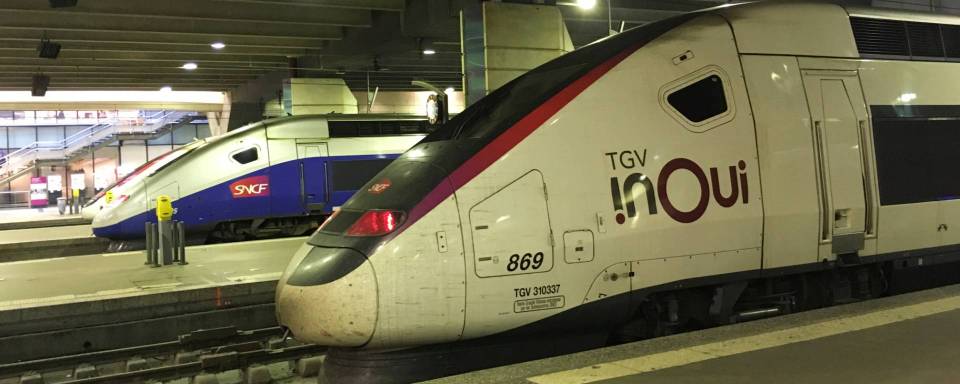
National and regional connections
And for your connections from your arrival station or to your departure station, you can check the timetables for regional express trains (TER) or Intercités trains.
TER and Intercités
- Looking for routes and timetables for coaches and TER trains in France? Click here:
- For Intercités trains, both day and night, it’s this way:
SNCF stations in France
In Paris or across the departments and regions, at all railway stations in France:
Travel+
- Trains in France and Europe
- Book a train ticket (French)
- Train stations (French)
- TER Regions (French)
- Map of the SNCF network (French)
- INTERCITÉS and night trains (French)
- Atlas of the French rail network (French)
- Transport in France: Bus, train, road, bike… (French)
- High-speed rail lines around the world, Wikipedia