

Want to travel by train? Much more than just a means of transport, the train has revolutionised economic flows, trade and mobility in the space of two centuries.
From the first steam locomotive to the high-speed train, we take a look at the history and practicalities of railway lines andtrains in France, Europe and the rest of the world.

History of the train
The use of tracks as a means of transport dates back to the wooden rollers used by the Egyptians and Romans to move stones on building sites. The cart tracks used in the Middle Ages and guided networks, mainly in mines, can also be considered the ancestors of the railway.
Find a ticket?
Need to find a ticket to suit your timetable and destination quickly? Direct access:
In England and Europe
The history of the train actually began in the early 18th century with the appearance of the first locomotives. At the time, horse-drawn carriages were still commonly used to pull wagons along dedicated tracks. The first railways were often built of wood, which limited their durability and strength.
The use of iron for rails and wheels and the development of the external combustion engine marked the start of a meteoric rise in rail locomotion.
A major tool of the industrial revolution, the first operational steam engine for a locomotive was built in 1814 in the Killingworth coalfield in England for the coal trade. The first railway line to carry passengers was opened in 1825, again in England, between Stockton and Darlington.
As the 18th century progressed and railway concessions were granted, the momentum gained by the railways continued unabated, mainly as a result of private investment in coal, goods and agricultural products.
The movement of passengers, mainly focused on the mobility of labour, was not left behind. The first public line was created between Brussels and Mechelen in Belgium, before being extended to Germany.
An explosion of railways followed throughout industrial Europe, and by 1845 there were already 20,000 kilometres of track, almost half of it in England.
On the American continent, it was in the United States that the train developed at the same time, with a particular increase during the American Civil War for the logistics of men, supplies and weapons.
To date, the 6 main countries in the European Union (Germany, Spain, France, Italy, the Netherlands and Poland) have around 120,000 kilometres of track*, including 7,000 kilometres* of high-speed lines.
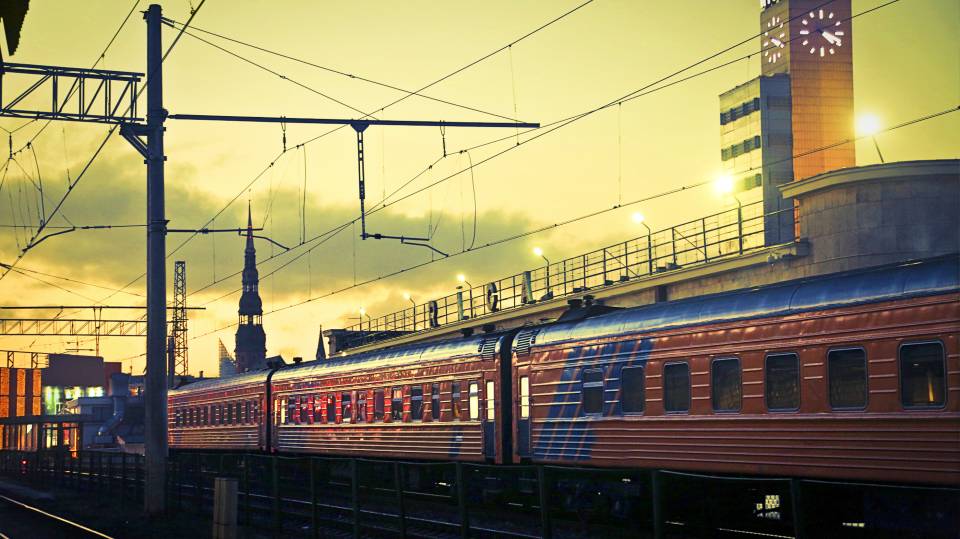
Trains in France
By the end of the 18th century, France had an extensive road network, with stagecoaches and post offices criss-crossing the country’s main routes at a reduced speed. Canals and navigable waterways, with a large inland waterway industry, also provided a large proportion of the country’s goods transport.
The train transformed regional planning and accelerated the pace of travel and mobility: while it took 14 hours to cover the 130 kilometres from Paris to Rouen in 1828, by 1848 the journey took less than 4 hours.
Delayed by the economic consequences of the Napoleonic wars and the State’s vision of roads and rivers, with the railway defined as a dry canal until the mid-19th century, France saw the emergence of its first railway concession in 1823.
This line, which ran from Saint-Etienne to Andrézieux, was designed to transport coal to the coalfields in the Loire department. It opened in 1827 and was the first railway in continental Europe, just before the one between Budweis, Linz and Gmunden in Austria. This horse-drawn railway was initially pulled by horses.
Awarded a concession in 1826, the 58-kilometre Saint-Etienne to Lyon railway line was the first to open to passengers in 1831. Steam locomotives took over in 1844, saving a considerable amount of time – the journey took 2 hours and 30 minutes.
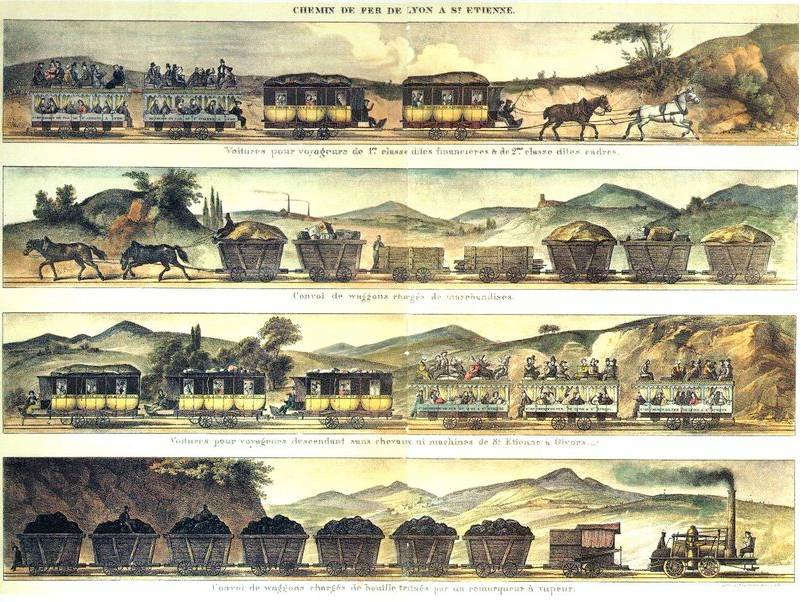
From these dates onwards, concessions and the opening of train lines in France flourished in all regions, between main lines and local railways.
Map of trains in France
And to see how trains have evolved in France, take a look at the animated map of the network from 1827 to 2020:

Also in maps, a global version of the SNCF network in France (French) and detailed with the national atlas of the railway network (French) will give you a complete view of trains in France.
Key dates
Key dates in the history of the rail network and trains in France:
The first experiment with an electrified link took place in Saint-Etienne in 1893.
In 1914, the French network included almost 38,000 kilometres of general and local interest lines throughout the country.
1937 saw the creation of the SNCF, the French national railway company, which manages the entire French network and in which theState is the majority shareholder. Before the war, 10,000 kilometres of lines were closed to passengers for the first time, particularly with the development of road, car and bus traffic.
1972 marked the end of steam traction for passengers and 1975 for freight.
1981 saw the inauguration of the high-speed train (TGV) (French) between Paris and Lyon on a special line (LGV) where speeds reached 260 kilometres an hour (300 km/h today). Travelling by train changed its rhythm.
Over the decades, the train, initially deployed to transport coal and goods, saw its passenger traffic grow until the advent of the car and road traffic.
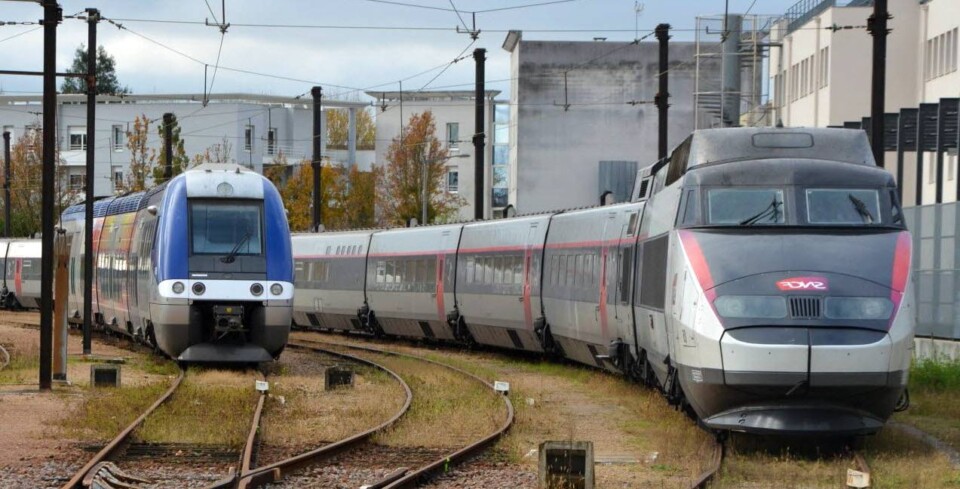
Travelling by train
The development of the RER in the Paris region, the TER in the other regions of France and the high-speed lines in France and to neighbouring countries has reinforced this use for passengers.
On their daily commute to work, at weekends or on holiday, passengers are becoming the main customers for trains in France, to the detriment of freight, which is shrinking in the face of road haulage.
Mainline, intercity and TGV services in France
Centred around Paris and France’s major cities, the national mainline network allows you to travel by train throughout France and to neighbouring European countries.
The network is built around the high-speed lines(LGV) with the high-speed trains(TGV) and the Intercités lines, which link major cities and destinations day and night.
HIGH-SPEED LINE, TGV
To travel quickly by train from one city to another and to the main airports, here are the TGV lines:
TGV Inoui and Ouigo cross France from Paris and to Europe.
- Timetables, TGV ticket reservations in France
- Timetables and reservations for TGV tickets to Europe
- Find out more about TGV and LGV high-speed trains :
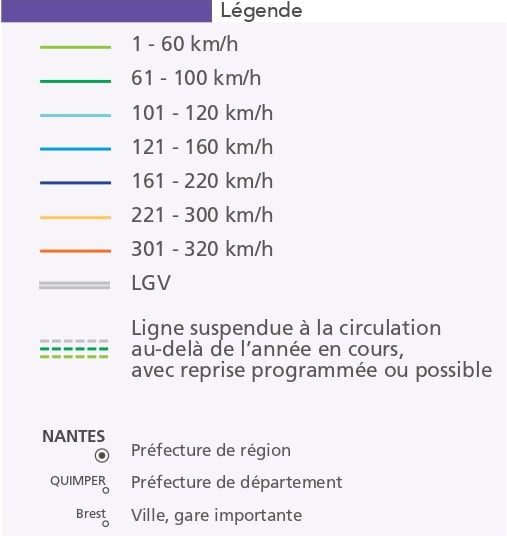
Map of train speeds in France
Regional, national or high-speed lines, here is a map of the network by train speed in France:

Intercity trains
Other solutions for travelling by train between major cities, day or night, are the Intercity lines (French):
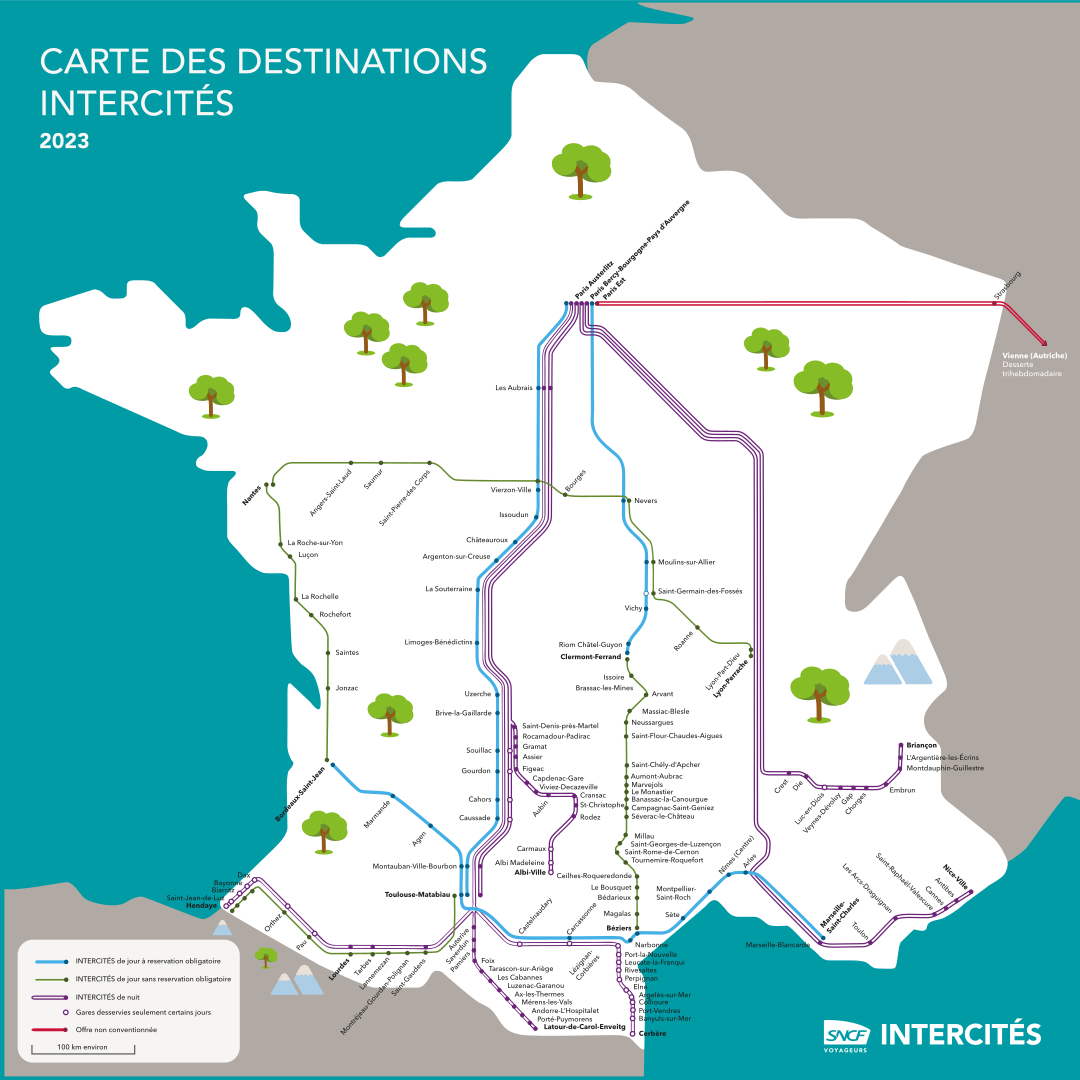
Map of Intercités trains
Here is a map of the main Intercités (French) destinations for train journeys across France:
Trains in France’s regions
Generally referred to by the acronym TER for regional express transport, the regional train network is the result of a partnership between the regions and SNCF Passengers.
It allows you to travel by train between the communes and départements of France, in addition to the Intercités (French) trains and high-speed lines.

There are two exceptions:Île-de-France, where the Transilien (French) brand is used, and Corsica, which is now managed autonomously by Chemins de fer de Corse (CFC) (French).
TER, regional express transport
The regions manage and coordinate the TER coach and train network under an agreement with SNCF.
TER in the regions of France
For detailed information on tourist destinations, SNCF stations, lines and TER train timetables in the regions, visit the dedicated pages:
- Train in Auvergne-Rhône-Alpes
- Train in Burgundy-Franche-Comté (French)
- Train in Hauts-de-France (French)
- Train in New Aquitaine (French)
- Train in Occitania (French)
- Provence-Alpes-Côte-d’Azur train (French)
- Stations in Paris and the Île-de-France region (French)
- Train in Corsica (French)
- Trains in France and Europe
- TER trains and tickets in France in all regions (French)
Online tickets
If you want to check timetables and buy a ticket, here are the direct links for each region:

Travelling by train to Europe
Whether high-speed, scheduled or night trains, the train is a great way to travel across Europe.
High-speed lines
Travel by train toEngland, Belgium, Luxembourg,Germany, Switzerland,Italy andSpain.
- Timetables and reservations for TGV tickets to Europe
Map of TGV links to Europe
Focus on high-speed rail links from France to Europe:
Night trains in Europe
Want to discover Europe and travel by night train?
From Germany and Austria toSpain and Portugal, discover Europe’s night trains (French):
Interrail
And for unlimited rail travel in one or more European countries, discover the eurail Interrail Pass (French):

Trains in the world
Want to travel the world by train?
China, South Korea and Europe (Italy, Spain, Germany, Switzerland, United Kingdom), find the train ticket for your next international trip:
International train map
Explore rail lines and travel by train around the world (French) with this interactive map:
Railway links
Pages related to trains, stations and rail travel:
- LEX, the Léman Express train between France and Switzerland
- Rail Europe, book and buy your train tickets in Europe
- Stations, trains and TERs in Auvergne-Rhône-Alpes
- Taking the train to Switzerland: maps, network, stations and tickets
- Train stations and lines in Occitanie (SNCF / liO)
- ZOU trains and TERs in Provence-Alpes-Côte-d’Azur (PACA)
Travel+
- Map of trains in the world
- Trains in France and Europe
- Book a train ticket (French)
- Train stations (French)
- TER Regions (French)
- Map of the SNCF network (French)
- INTERCITÉS and night trains (French)
- Atlas of the French rail network (French)
- Transport in France: Bus, train, road, bike… (French)