
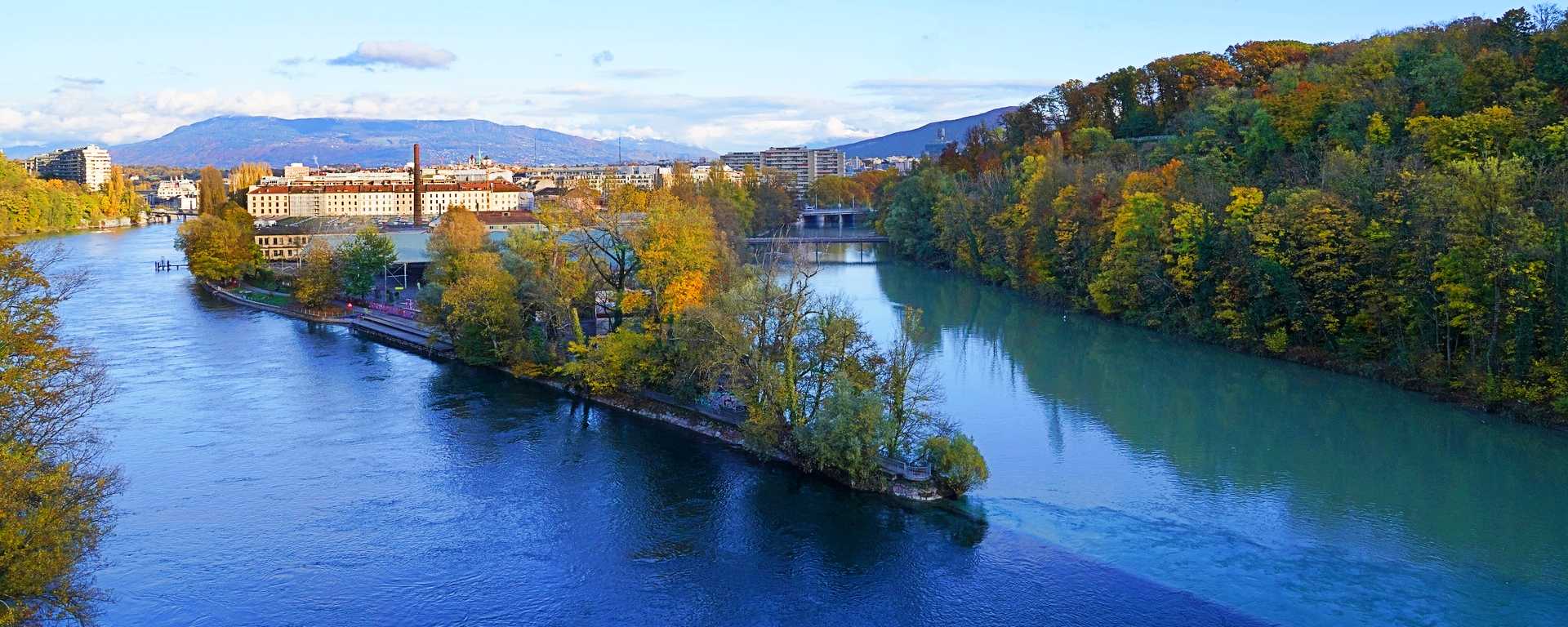
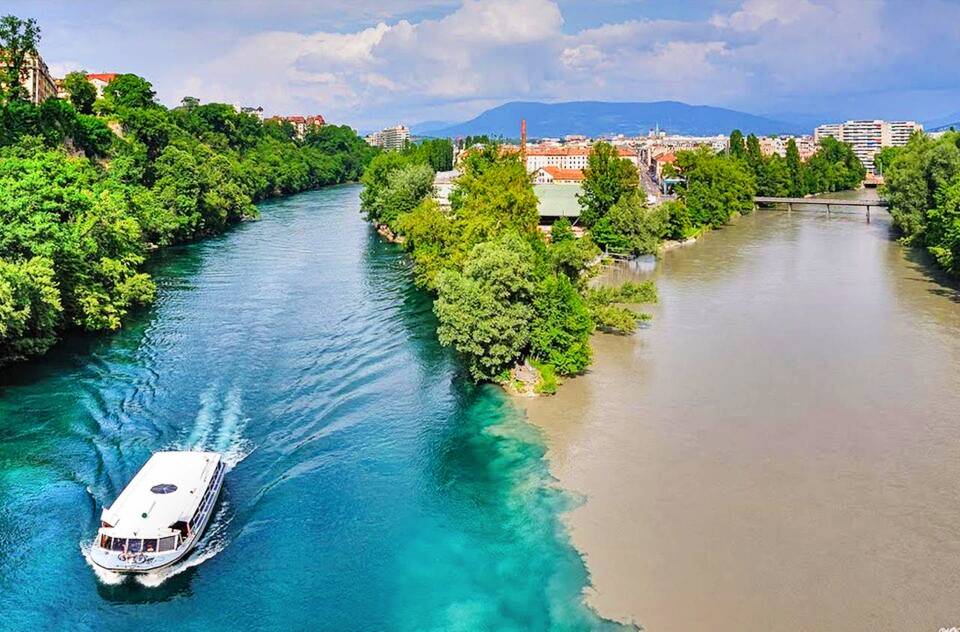
Upstream from Lake Geneva* in the commune of Geneva, discover the unique hydrological phenomenon of the confluence of the Rhône and Arve rivers, with the surrounding leisure activities of the Jonction site.

Have you ever had the opportunity to contemplate the confluence of the Rhône and Arve rivers? If not, you’re missing out on an incredible opportunity to witness a natural wonder.
As well as offering a spectacular contrast of colours between the two rivers, this meeting also provides a natural setting for a number of leisure activities, from musical refreshments to swimming, rafting and canoeing.
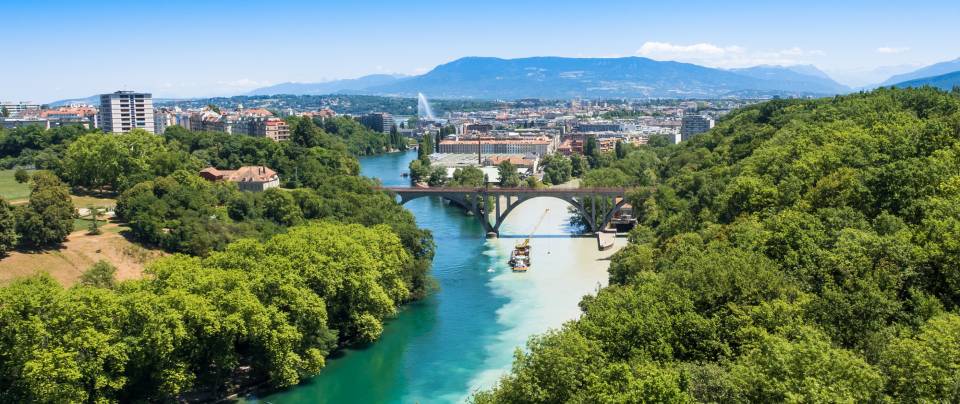
Confluence of the Rhône and Arve rivers
Confluence is a geographical term used in hydrology to describe the meeting of the waters of two rivers. In this case, it is the confluence of the Rhône and Arve rivers.
The Arve is an Alpine river that rises in the Mont Blanc massif and flows into the Rhône at Geneva, not far from the Swiss-French border.
The difference between the rivers is visible to the naked eye: the Rhône is clear, while the Arve is muddy. This creates an impressive contrast, giving rise to unique palettes of colour and form throughout the seasons.
Leisure activities around the confluence
The Pointe de la Jonction, a sort of Geneva peninsula between the Rhône and Arve rivers, is a unique, popular and lively place. Considered a riverside leisure area, it’s a busy place, especially in summer, whether you’re looking for guinguettes, picnics or simply a stroll.
The beach at La Jonction is also a great place to swim and a starting point for rafting, canoeing and kayaking on the powerful currents of the Rhône, which are quickly multiplied by the confluence of the Arve.
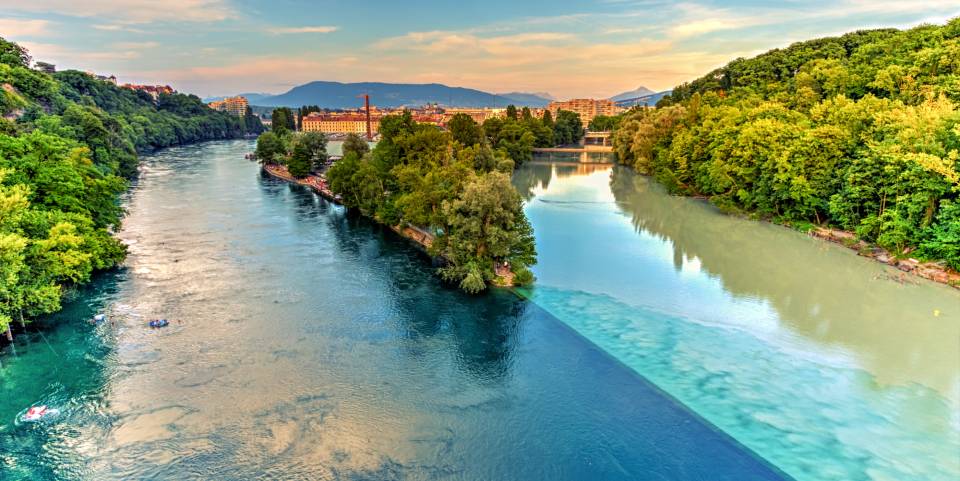
The influence of the Arve on the Rhône
Scientists are studying the water movements and currents created by the meeting of the Rhône and Arve rivers to understand how they affect the localenvironment. Climate change and variations in the river’s flow also have an impact on flora and fauna, as do human activities such as the screw-cutting industry upstream on the French coast, which is a source of pollution.
The Arve is one of the most powerful rivers in France, with an average annual flow of 74 m3/s observed over almost 50 years upstream of the Swiss border. Its colour comes from the sediment it carries from the Mont Blanc massif.
The confluence of the Rhône and Arve rivers is also the meeting point of two catchment areas, the Rhône and the Arve. The Rhône has an average flow of 251m3/s before it meets the Arve, to which must be added the 74m3/s of the river at the confluence.
The confluence of the Rhône and Arve rivers is subject to regular flooding, particularly during the spring and autumn floods caused by rainfall and snowmelt.
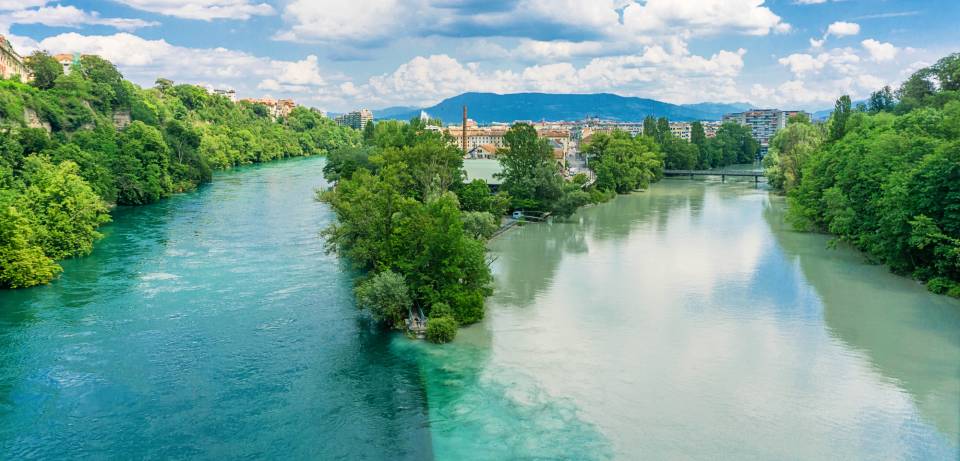
A multi-faceted confluence
In conclusion, the confluence of the Rhône and Arve rivers is a place of great geographical, historical and environmental importance. Its location on the border between Switzerland and France makes it a meeting point for two cultures and two hydrological systems, and its natural beauty makes it a unique place to discover.
Satellite map of the confluence
With Google Maps, satellite map between the Rhône and Arve rivers and location of the Jonction in Switzerland:
Travel+
- The wonders of Lake Geneva, between France and Switzerland
- The Arve-Rhône junction, Wikipedia and Wikimedia photos ↗
- Parc de la jonction à la pointe de la confluence, City of Geneva ↗
- Arve and tributaries, SM3A ↗
- Destination: Rhône Valley
- Rhône and Mediterranean flood warning system
- Map of river tourism on the Rhône
- Territories, towns, and villages crossed by the Rhône
- Map of the Rhône River and its tributaries
- By bike: ViaRhôna and Route du Rhône
- Where to stay along the Rhône River?
- IGN maps: Rhône Valley