
Would you like to find out more about the watersheds in France? Find out here where and how these lines cross the French territory towards the sea, the Channel and the ocean, how they delimit the catchment areas and structure the water agencies.

The watershed
Would you like to take a geographical journey through rivers, mountains and regions?
These imaginary lines invite you to understand the streams, rivers and creeks that shape our regions and landscapes. Towards the English Channel, the North Sea, the Atlantic Ocean or the Mediterranean, as an invitation to follow the waterways of France.
Watersheds are often little known. Yet they play a crucial role in understanding hydrography and the environment, managing water resources and preserving the French landscape.
A simple definition of water sharing?
A watershed is an invisible geographical boundary that separates the catchment areas of a territory. In other words, it is a mythical line along which natural waters flow either on one side, towards a downstream river, sea or specific ocean, or on the other side, towards another body of water downstream.
This concept is essential if we are to understand how water circulates across the country and how it is distributed between different geographical areas, and more particularly between catchment areas.
Map of watersheds in France
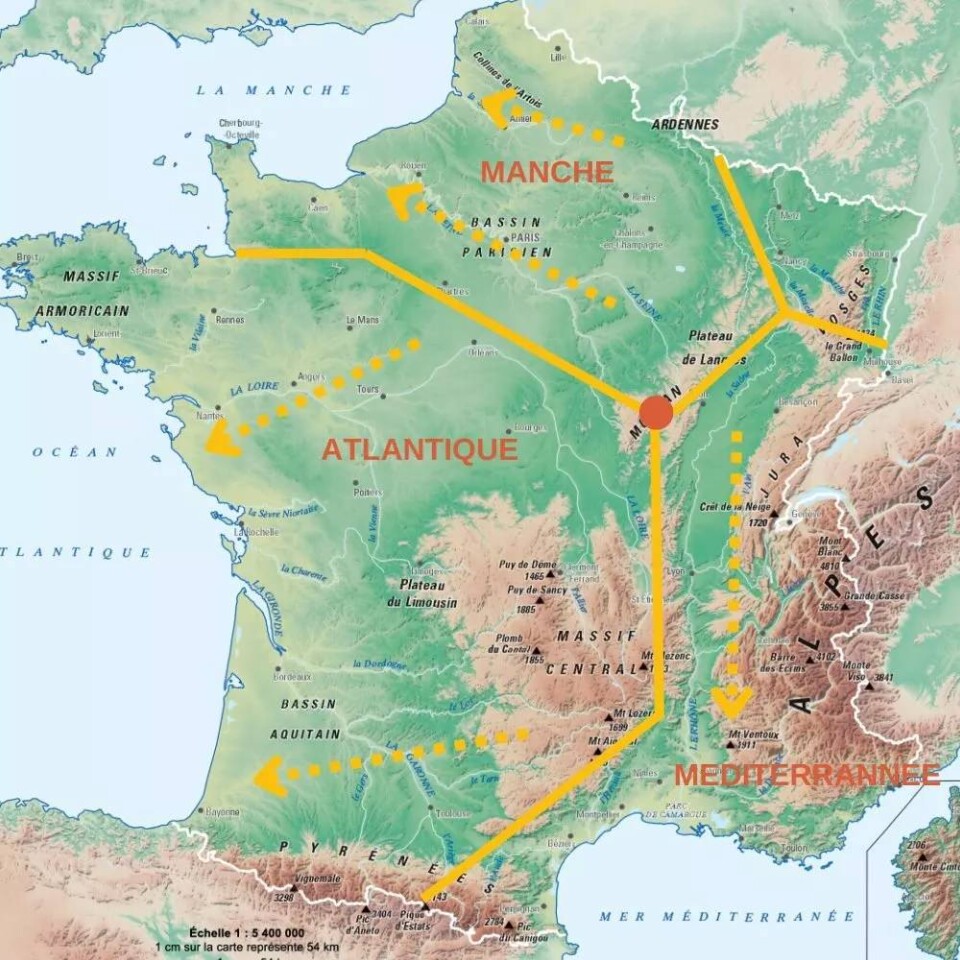
The division of water in France is broken down into 4 geographical zones, 3 of which are completely integrated into the country’s borders.
In each part, all the streams, rivers and creeks flow towards :
- The Mediterranean Sea
- The Atlantic Ocean
- La Manche
- The North Sea
Here is a schematic map of the watersheds in France:
Dividing lines in Europe
And to get an idea of how Europe is divided up, here is a map of theEuropean Union ‘s river basins, with the main rivers and their watersheds:

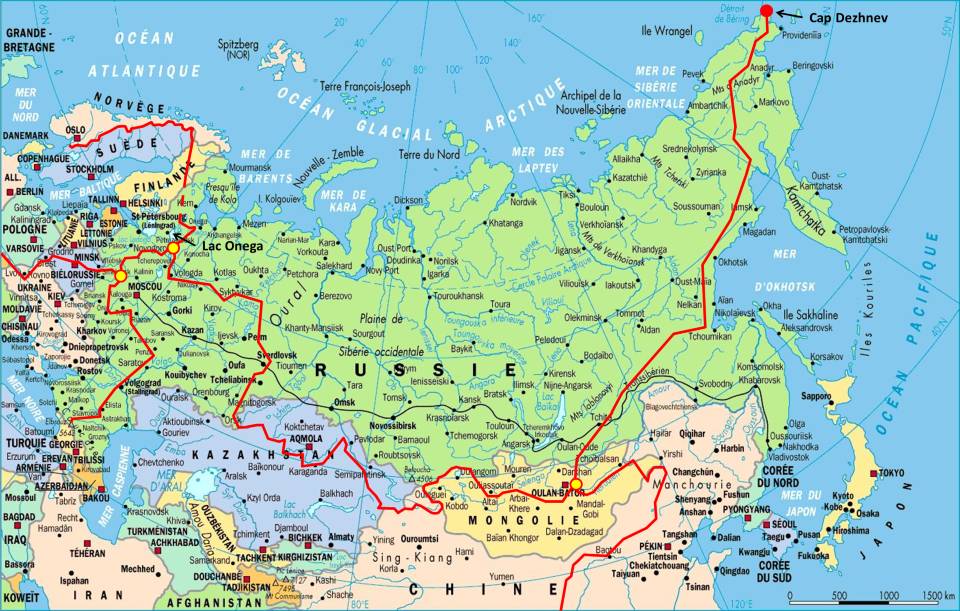
Geographical anecdote: there is a watershed that crosses the entire Eurasian plate.
It runs from the Strait of Gibraltar, and more precisely from Tarifa Point in Andalusia, to the Behring Strait, and more precisely to Cape Dejnev on the Chukotka peninsula.
The watershed in the Ardèche
The Ardèche is an interesting example of the artistic development of the watershed in France.
The department is crossed by the imaginary line separating the waters flowing towards the Mediterranean on one side and those flowing towards theAtlantic on the other. This line passes through Mont Gerbier de Jonc, the source of the Loire River, as well as a number of towns on the Ardèche plateau.
Along this walking route, a number of architectural creations and works of art dot a footpath dedicated to the watershed.
To find out more, visit the page dedicated to water sharing in the Ardèche and Haute-Loire:

Catchment areas in France
Metropolitan France has several main catchment areas linked to the rivers that flow through them:
- The Mediterranean basin, which encompasses the south-eastern regions and stretches from the Spanish border to the Italian border.
- The North Atlantic basin, which covers the west of the country, from the Landes to Brittany.
- The South Atlantic basin, which includes the regions between Gascony and the Basque coast.
- The Rhône basin, centred on the course of the Rhône and extending as far as Switzerland.
- The Loire basin, which covers the course of the Loire and its tributaries as far as the Nantes estuary.
- The Seine basin, from Paris to Normandy along the river.
- The Nord-Pas-de-Calais basin, with the regions around the Channel and the North Sea.
- The Rhine basin, in the north-east of France close to the border marked by the river Rhine.
Each of these catchment areas has its own specific landscape and climate characteristics, ranging from alpine mountains to continental plateaux, river valleys and coastal plains.
What is a catchment area?
In less than 3 minutes you can understand the geographical concept of a catchment area in a simple and visual way:
Human impact on watersheds
Human activities such as agriculture, urbanisation and the exploitation of natural resources have an impact on the environment of watersheds. For example, the construction of dams or deforestation can alter the course of these invisible boundaries, with significant environmental consequences.
Climate change is also having a direct impact on river basins in France. Changes in rainfall and temperature are affecting the redistribution of water resources across the country. Some may face increased risks of drought or flooding, while others could benefit from additional water supplies.

Maps of waterways in France
To illustrate our point with maps, here are 2 illustrations to help you understand the geography of the basins.
Map of catchment areas
Here are the main river basins in France, which correspond to the catchment areas:

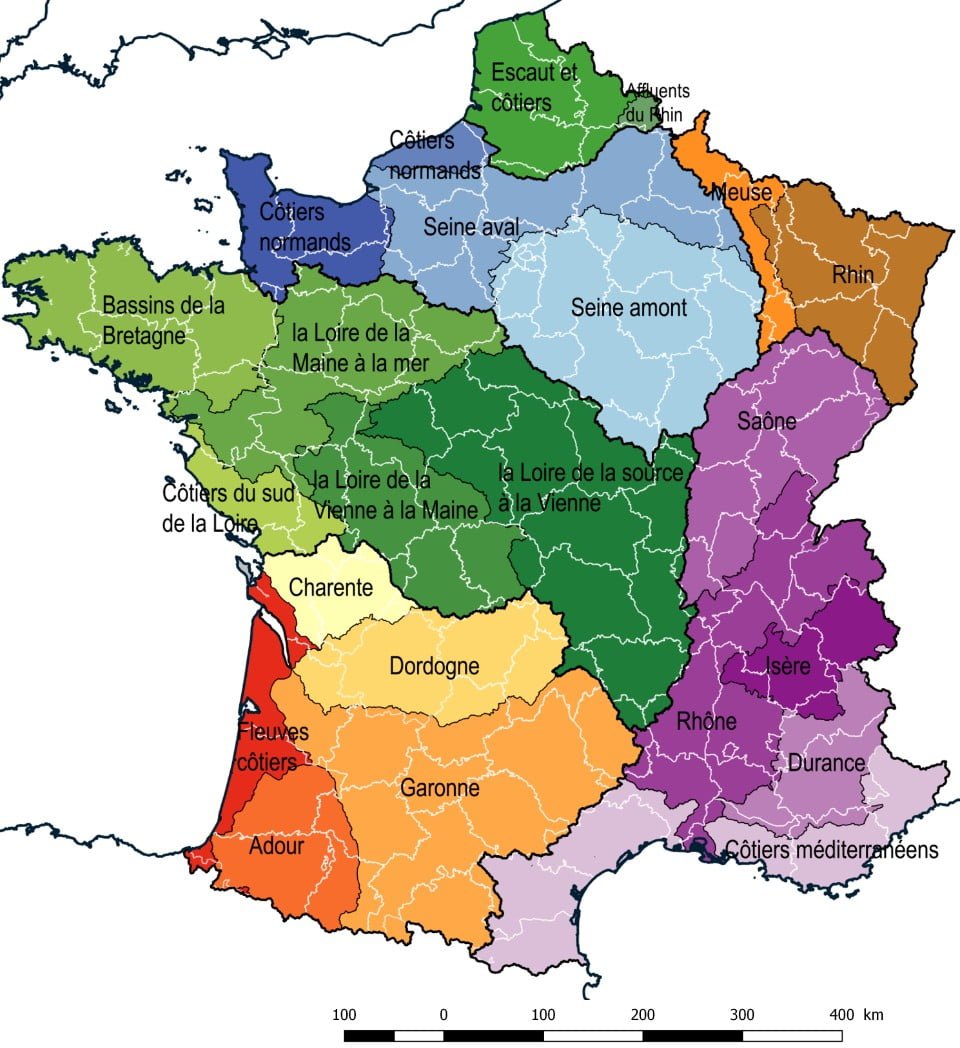
Map of hydrographic regions
To complete the picture on a more detailed scale, here is a map of the hydrographic regions of France:
Water agencies in France
Originally known as basin agencies, the water agencies are public bodies whose main objective is to manage water at the level of each major river basin.
Their missions
They are responsible for :
- Managing and sharing water resources
- Collecting fees from users
- Financing projects (aquatic environments, pollution, reducing consumption)
- Guaranteeing good water status (monitoring, reducing pollution, managing rainfall, etc.)
- Protecting watercourses and natural habitats in coastal waters
The water agencies are also responsible for coordinating the master plan for water development and management (SDAGE*) and its application on the ground in the catchment area concerned.
In addition to their initial mission of managing water and preserving aquatic environments, over the decades the water agencies have been assigned other missions, such as supporting biodiversity and restoring green and blue networks.
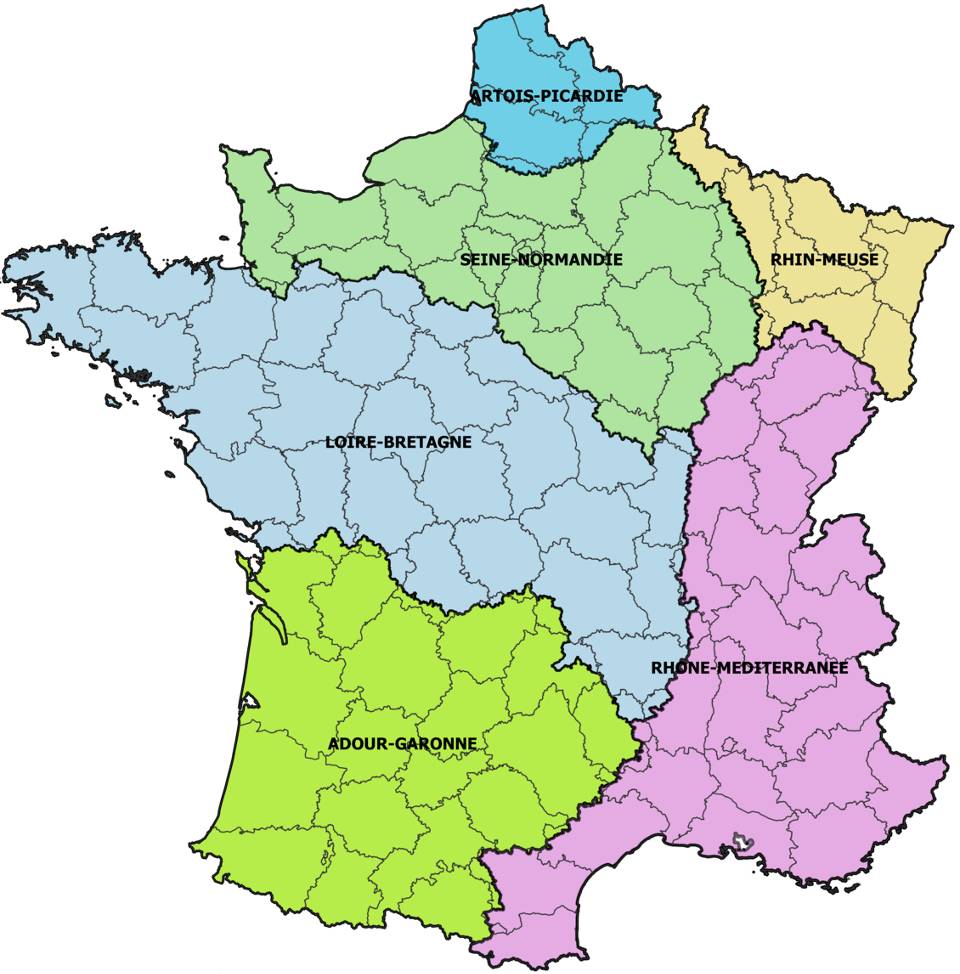
List and map of water agencies
France’s water agencies are divided into 6 major river basin regions:
- Adour-Garonne
- Artois-Picardie
- Loire-Bretagne
- Rhine-Meuse
- Rhône-Méditerranée-Corse
- Seine-Normandie
Water agencies in mainland France and on the map :
Have you ever crossed a watershed? Click here to tell us all about it!
Travel+
- France’s rivers
- Water agencies in France
- Wikipedia: Catchment areas , Hydrography , Watercourses
- Triple water divide on the Langres Plateau
- The watershed explained by Alloprof
- What is a SDAGE?
- Map of rising water levels in France
- Where to swim?